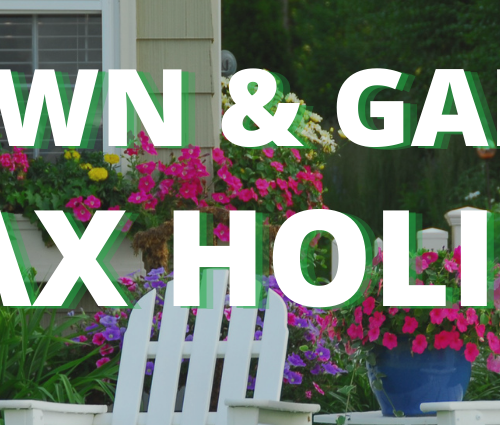
Planning & Designing a Garden
Your home and landscape are as individual as your personality.
The pictures in a book may look great, but if they don’t
fit your lifestyle, and your environment, they won’t
make a good basis for planning your garden. Here is a step-by-step
for getting started in planning the home landscape and selecting
the professionals who will help you have a beautiful and successful
garden.
Benefits
of Landscaping
Investment in your property always provides you with pleasure,
but some investments actually pay you back by enabling you to
recover your cost when you sell the home. an article in Money
magazine listed these recovery values for usual home renovation
projects:
Landscaping recovery value: 100-200%
Kitchen recovery value: 75-125%
Bathroom recovery value: 80-125%
Deck or patio recovery value: 40-70%
Swimming pool recovery value: 20-50%
Selecting your landscape partners
If you are a do-it-yourselfer, you may want the services
of a designer or contractor for major work, and a relationship
with a retail nursery or garden center for purchasing your
plants and equipment. Many nurseries have designers on staff
to assist in your planning. For a list of retail nurseries
in your area visit the Landscape Texas find
a vendor section.
There are several types of professionals available to help
you are each stage of your project. Ensure your success by
doing business with a qualified professional
Retail Nursery & Garden Center
Texas Certified Nursery Professional (TCNP)
Retail nursery employees, managers, and owners take for
a self study course consisting of 4 parts: Plant Culture,
Plant Identification, Merchandising, and Landscape Design.
Certification requires continuing education
Texas Master Certified Nursery Professional (TMCNP)
Individuals who have earned the TCNP designation and want
to take the next step in professionalism attend the TMCNP
program consisting of a 4-day study course taught by professional
instructors and industry professionals, followed by an exam.
This course offers advanced training at Texas A&M University
using TAMU facilities and laboratories. Certification requires
continuing education.
Find a retail nursery in your area that employs certified
professionals by visiting the Find
a Vendor section of this web site.
Design assistance is available from a landscape designer
or a landscape architect.
A landscape architect is
licensed by the sate after university graduate work and a
qualifying exam administered by the state. A landscape architect
will produce and blueprint and may work with landscape contractors
to complete a project.
A landscape designer specializes
in designing outdoor spaces, but is not a landscape architect.
A landscape contractor is
qualified to read a blueprint. The contractor can lay drainage
pipes, use earth-moving equipment, and supervise stonemasons
and carpenters. Some landscape contractors employ landscape
architects in their design departments.
Texas Certified Landscape Professional
This is a peer-reviewed certification administered by the
Texas Nursery & Landscape association. Landscape contractor
supervisors, owners, and managers take for this self-study
course followed by an exam covering 20 topics including management,
landscape and irrigation design, resource efficiency, building
materials, botany, turf, and pruning. Continuing education
is required for this certification. To find a Texas Certified
Landscape Professional in your area visit the Find a Vendor
area of this website.
Once you have identified several potential landscape partners
interview them and make your decision based on more than just
price. Be sure the individual you hire is qualified to do
the work you need and is properly licensed by the municipality
and state of Texas. Irrigation contractors are required to
be licensed by the state of Texas. To verify the qualification
of a contractor, visit the Texas Commission on Environmental
Quality web site
Ask some questions:
Do you want to...
Do it yourself
Have someone do it for you?
Combine the two strategies?
Do it yourself - new landscape
Landscape Basics
Just starting out in Gardening? You need the following basic
tools:
- Rake
- Spade
- Watering can
- Garden hose
- Leak-free sprinkler
- Extra pots for container grown plants
- Wheelbarrow
- Gardening gloves
- Hand-held trowels
- Pruning shears
- Pruning saw
- Lopping shears
- Bulb planter
Good quality tools pay off in the long run because they
last longer, and they are safer and more effective. To find
a TNLA member nursery or garden center near you that sells
gardening tools, visit the “products
and services” page.
Back to top of page
How many plants
For masses of color in a flower bed, use this simple chart
to decide how many plants you need.
- measure the flower bed.
- use the plant reference guide on this web page to find
out the recommended spacing.
- apply this formula using the chart below
Plants per square foot x number of square feet in the garden
= Number of Plants Needed
Sample
Planting petunias is a flower bed 8 ‘ by 10’ or
80 square feet. Petunia’s recommended spacing is 10-12
inches apart
1.4 (Plants per square foot) x 80 (square feet in the flowerbed
= 112 petunia bedding plants
| Spacing |
Plants/sq. foot |
| 4” |
9.0 |
| 6” |
4.0 |
| 8” |
2.3 |
| 10” |
1.4 |
| 12” |
1.0 |
| 15" |
.65 |
| 18” |
.45 |
| 24” |
.25 |
| Spacing recommendations
for common plants |
| Plant |
spacing in inches |
| Sweet Alyssum |
10-12 |
| Begonia |
7-9 |
| Dusty Miller |
6-8 |
| geraniums (full sized) |
10-12 |
| Impatiens |
8-10 |
| Impatiens New uinea |
10-12 |
| Marigolds(full sized) |
3-6 |
| Pansies |
6-8 |
| Petunias |
10-12 |
| Salvia |
6-8 |
| vinca |
6-8 |
| Conversion from pounds
per acre into weights for small areas |
| Rate per acre (lb) |
lb per |
| |
1000 sq ft |
100 sq ft |
| 100 |
2 1/2 |
1/4 |
| 200 |
5 |
1/2 |
| 400 |
9 |
1 |
| 800 |
18 1/2 |
2 |
| 1000 |
23 |
2 1/2 |
Download this questionnaire and landscape grid to help analyze
your area and landscaping needs. Take this information to
your local nursery or garden center when you visit and ask
for a Texas Certified Nursery Professional to help plan your
garden. To find a TNLA member near you, visit the products
and services section of this web site.
Lawn and Garden Building Blocks
Trees
Uses
Benefit
Characteristics
Placement
Soil
Planting
Maintenance after planting
Pruning
feeding
Watering
Pests and Diseases
Avoiding tree injury
Shrubs
Uses
Soil
Types of soil
Selection
Maintenance
Water
Pruning
Fertilization
Pests and Diseases
Winter Protection
Lawns
Benefits of lawns
Where and when to plant a lawn
Water
Fertilizer
Thatch removal
Mowing
Common pests and diseases
Groundcover
When to use
Soil requirements
Growth habits
Problem solvers
Maintenance
Common pests and diseases
Vines
Use
How they grow and types of support
Annuals vs perennials
Common pests and diseases
Flowers
Perennials
Uses
Soil preparation
Planting
Maintenance
Winter protection
Water
Fertilizer
Common pests and diseases
Annuals
Use
Placement
Soil preparation
Planting
Water
Fertilizer
Common pests and diseases
Do it for me - new landscape
Questionnaire and grid [pdf file]
Back to top of page
Selecting a landscape professional
A landscape professional is your partner in making your
home or commercial landscape beautiful, environmentally responsible,
efficient, and enjoyable. Landscape professionals provide
all types of services from design only through installation
and maintenance.
Why choose a landscape professional?
- Home value. Landscaping
greatly impacts home value. A bare root twig planted near
a window can grow into a 50-foot tree. A professional plan
sites plants correctly so they won't become threats or obstructions
to the home.
- Peace of mind. Hiring
a design professional before ripping up your lawn will save
you headaches, not to mention dollars. Many landscape professionals
consider design a value-added service.
- Know-how. Mass marketed
plants can be non-hardy for your area. You may not be aware
of varieties susceptible to pest infestations. A professional
helps you avoid expensive mistakes. Landscape designers
keep up with the newest varieties, offering you a whole
spectrum of plant material.
- Long-term maintenance.
A professional will ask how much time you want to devote
to maintaining your landscape and will design accordingly.
Garden ideas gleaned form magazines may be impractical for
your lifestyle. The orchard or rose arbor you want may require
regular chemical treatments to survive.
- Investment in the future.
Wise homeowners choose investments based on their return.
The unified aesthetic appearance of a professionally designed
landscape is intrinsic to its value. If well-executed and
attuned to its surroundings, landscaping has a recovery
value of 100 to 200 percent, according to MONEY Magazine.
Back to top of page
What type of landscape professional
do I need?
A Garden Designer specializes
in designing outdoor spaces, but is not a landscape architect.
A Landscape Contractor is
qualified to read a blueprint and may also do design. A landscape
contractor can lay drainage pipes, use earth-moving equipment,
and supervise stonemasons, carpenters, and laborers. Some
landscape contractors employ landscape architects in their
design departments.
A Landscape Architect is licensed
by the state after years of university graduate work and a
rigorous test. A landscape architect will produce a blueprint
and may hire contractors to complete the project.
Back to top of page
What criteria should I use in selecting
a landscape professional?
Professionalism
- Does the firm have Texas Certified Landscape Professionals,
or Texas Certified Landscape Technicians on staff.
- Do they have a federal identification number that designates
it as a real business?
- Are they insured?
- Professionals arrive on time and take pictures or draw
sketches of your property while there.
Ask:
- How many years have they been in business?
- Ask for customer references and follow up by calling referrals.
- Who will be supervising the installation - problems can
result from communication gaps between estimator and installer.
- Are the installers trained, and what proof of training
do they offer.
Paperwork
- Ask for an itemized estimate listing materials and plant
sizes.
- Who is responsible for cleanup.
- The estimate should detail products essential to the desired
result: weed control, edging, mulching, etc.
- A reputable firm provides a contract specifying starting
and completion dates (making allowances for weather).
- If a deposit is required, the contract should show that
the money is held in escrow at a specific bank.
Timing
In most regions, landscape professionals find the best
time to plant doesn't necessarily correlate with the busiest
time. A reputable firm will make recommendations about planting
times, while trying to accommodate your timing needs.
Commitment to Communication
Communication with the consumer is one of a landscape
professional's most valuable assets.
Back to top of page
What should I do to work successfully
with the landscape professional?
- Be frank about the amount of money you intend to spend.
A "time plus materials" arrangement is one way
to set prices.
- Interview several professionals. Ask to see their "before
and after" portfolio of completed jobs.
- Check references.
- Go see a completed project
- If you have trouble visualizing the job, ask for a sketch.
- Seek guarantees that faulty structural work and plants
that perish within a year will be repaired or replaced without
charge.
- Remember that a newly finished landscape may look a bit
sparse until the plants have a chance to grow. The end result
will begin to show in two to three years.
Back to top of page
Where do I find a landscape professional?
Visit the products and services
area of this site to find a landscape professional near
you.
Do it for me - renovation
Questionnaire and grid [pdf file]
find a landscape professional
Back to top of page
|